Expert Care for Skin and Mucosal Conditions Affecting the Mouth & Genital Area
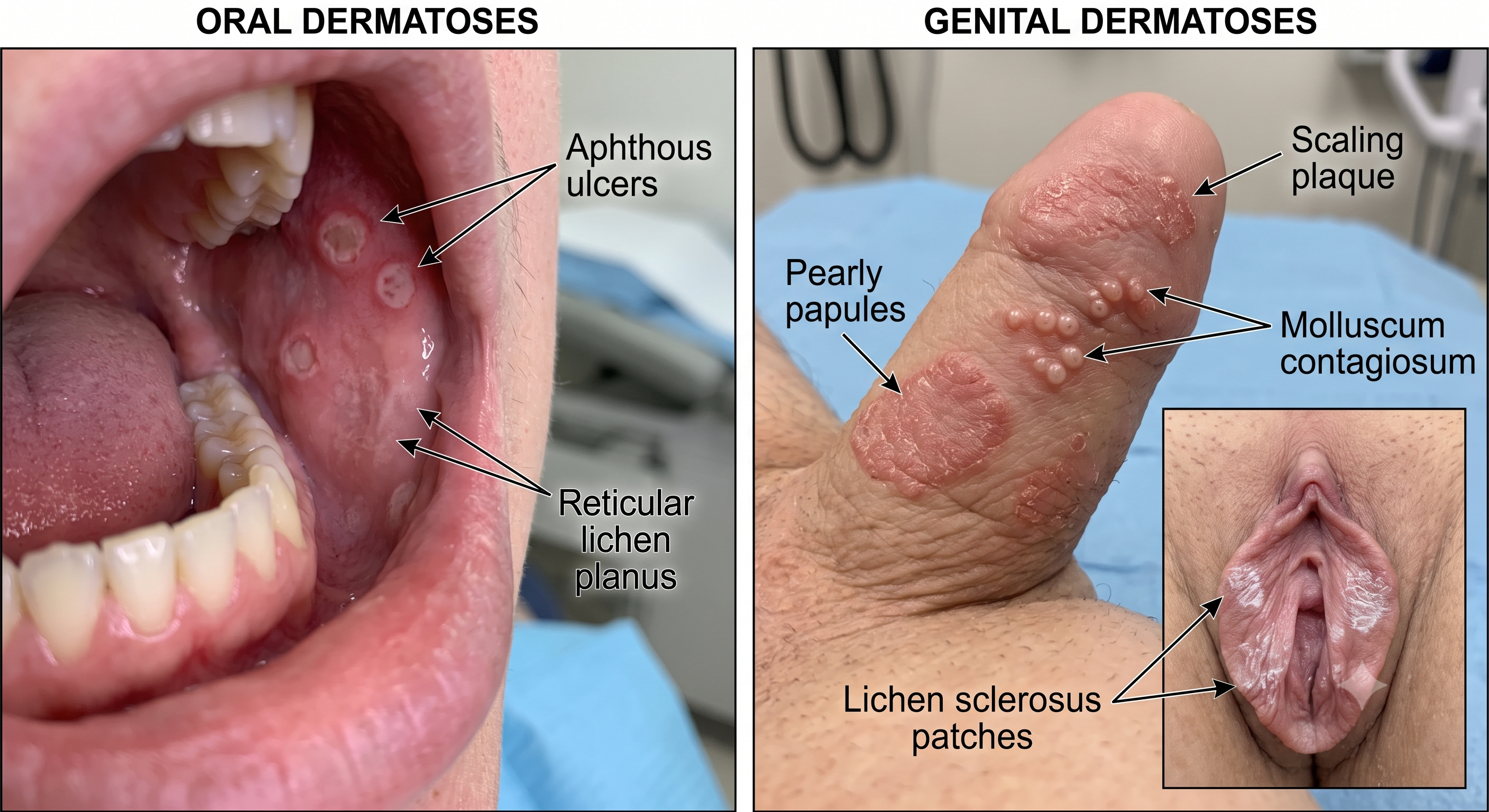
Oral and genital dermatoses are a group of skin and mucosal disorders that affect the mouth, lips, tongue, gums, genital region, and surrounding skin. These conditions may cause pain, itching, burning, ulcers, discoloration, or persistent rashes, significantly affecting daily activities, eating, sexual health, and overall quality of life.
Many oral and genital skin conditions are not sexually transmitted and may result from autoimmune diseases, inflammatory disorders, infections, allergies, or chronic skin conditions. Early diagnosis by a dermatologist is essential for effective treatment and prevention of complications.
What are Oral & Genital Dermatoses?
Oral and genital dermatoses are conditions that affect the delicate skin and mucous membranes of the mouth and genital area. These disorders may be temporary or chronic and often require specialized diagnosis because many conditions have similar symptoms.
Proper evaluation helps identify the underlying cause and ensures appropriate treatment.
Common Symptoms
Symptoms may include:
- Painful mouth ulcers
- White patches inside the mouth
- Red or inflamed skin
- Itching in the genital area
- Burning sensation
- Skin discoloration
- Cracked or peeling skin
- Blisters or sores
- Pain during eating or sexual activity
- Dryness or irritation
- Swelling of the lips or genital area
- Persistent rash
Common Types of Oral & Genital Dermatoses
Oral Lichen Planus
A chronic inflammatory condition causing white, lace-like patches, redness, and painful ulcers inside the mouth.
Genital Lichen Planus
An inflammatory condition affecting the genital region, often causing pain, itching, burning, and erosions.
Lichen Sclerosus
A chronic inflammatory disorder that commonly affects the genital area, leading to white patches, itching, thinning of the skin, and discomfort.
Aphthous Ulcers (Canker Sores)
Painful recurrent ulcers that develop inside the mouth and usually heal within one to two weeks.
Behçet's Disease
A rare inflammatory condition characterized by recurrent oral ulcers, genital ulcers, and skin lesions, often associated with eye inflammation.
Chronic Eczema & Psoriasis
These common skin conditions can also affect the lips, mouth, or genital region, causing redness, itching, scaling, and irritation.
Contact Dermatitis
An allergic or irritant reaction caused by personal care products, latex, medications, or hygiene products, leading to redness, itching, and burning.
When Should You See a Dermatologist?
Consult a dermatologist if you experience:
- Mouth ulcers lasting longer than two weeks
- Persistent genital itching or burning
- White or red patches that do not heal
- Pain during eating or urination
- Recurrent oral or genital sores
- Skin discoloration in the genital area
- Persistent rash despite over-the-counter treatment
Seek immediate medical attention if you develop severe pain, rapidly spreading ulcers, high fever, or difficulty swallowing.
Treatment Options
Treatment depends on the underlying condition and severity.
Topical Medications
Treatment may include:
- Corticosteroid creams or ointments
- Calcineurin inhibitors
- Medicated mouth gels or rinses
- Moisturizers and barrier creams
- Antifungal or antibacterial medications when required
Oral Medications
For moderate to severe conditions, your dermatologist may prescribe:
- Corticosteroids
- Immunosuppressive medications
- Antihistamines for itching
- Antibiotics or antiviral medications when infections are present
Supportive Care
Additional measures may include pain-relieving mouth rinses, gentle skin care products, nutritional advice, and treatment of underlying autoimmune or inflammatory conditions.
Home Care & Prevention Tips
To help manage symptoms:
- Maintain good oral and personal hygiene
- Avoid harsh soaps and fragranced products
- Wear loose, breathable cotton underwear
- Avoid scratching affected areas
- Stay well hydrated
- Eat a balanced diet
- Avoid spicy or acidic foods if mouth ulcers are painful
- Follow your treatment plan consistently
- Attend regular follow-up appointments
Possible Complications
Without proper treatment, oral and genital dermatoses may lead to:
- Chronic pain
- Scarring
- Secondary infections
- Difficulty eating
- Pain during sexual activity
- Skin tightening or narrowing in severe inflammatory disorders
- Emotional distress
- Reduced quality of life
Early diagnosis and treatment help prevent long-term complications.
Meet Your Doctor

MBBS, MD (Dermatology, Venereology & Leprosy). Specialist in acne, scars, and cosmetic dermatology.
View Profile